Agricultural soils are dynamic living systems that support food production, regulate nutrient and water cycles, sustain biodiversity, and influence the exchange of greenhouse gases between terrestrial ecosystems and the atmosphere. Increasing pressure from intensive cultivation, soil degradation, biodiversity loss, climate variability, and declining resource efficiency has created an urgent need for more integrated and biologically informed approaches to soil management. Contemporary soil science is therefore moving beyond conventional assessments of physical and chemical fertility towards a deeper understanding of rhizosphere interactions, microbial communities, soil biological processes, and their contribution to resilient agroecosystems.
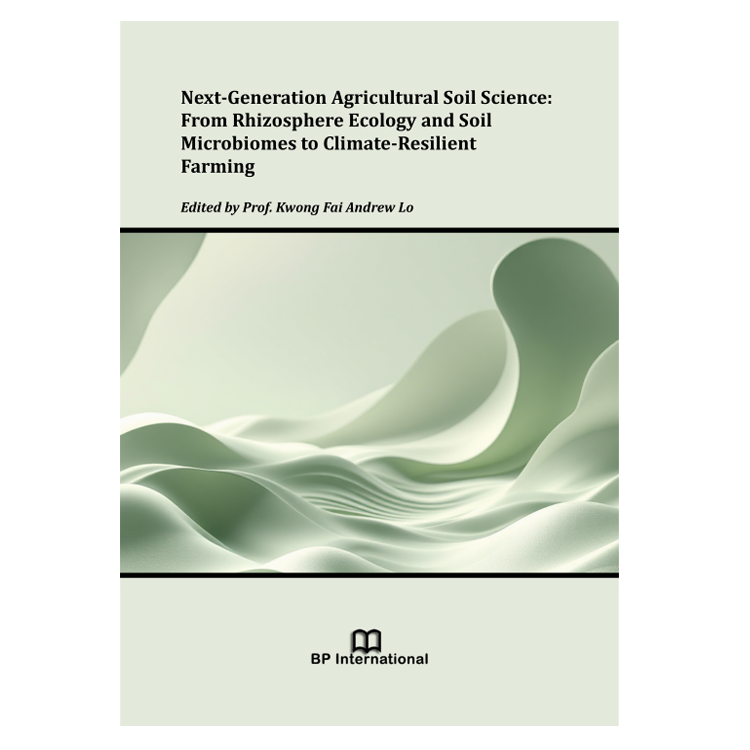
This book provides a comprehensive overview of emerging concepts and advances in agricultural soil science, with particular emphasis on the complex relationships among plant roots, soil microorganisms, nutrients, organic matter, and environmental conditions. It explores the ecology of the rhizosphere, the composition and functions of soil microbiomes, plant–microbe interactions, nutrient transformations, soil carbon dynamics, and biological mechanisms influencing soil health and crop productivity. Attention is also given to innovative approaches for improving soil fertility, enhancing nutrient-use efficiency, conserving soil biodiversity, and strengthening the capacity of agricultural systems to withstand climatic stresses.
The volume further examines regenerative soil management, biofertilisers, organic amendments, conservation agriculture, precision soil management, and emerging molecular and analytical technologies that are transforming soil research. By linking fundamental soil processes with practical management strategies, the book highlights pathways towards sustainable intensification and climate-resilient farming. Intended for students, researchers, educators, agronomists, soil scientists, environmental professionals, and agricultural practitioners, it offers an interdisciplinary perspective on how next-generation soil science can contribute to productive, environmentally responsible, and resilient agricultural systems.