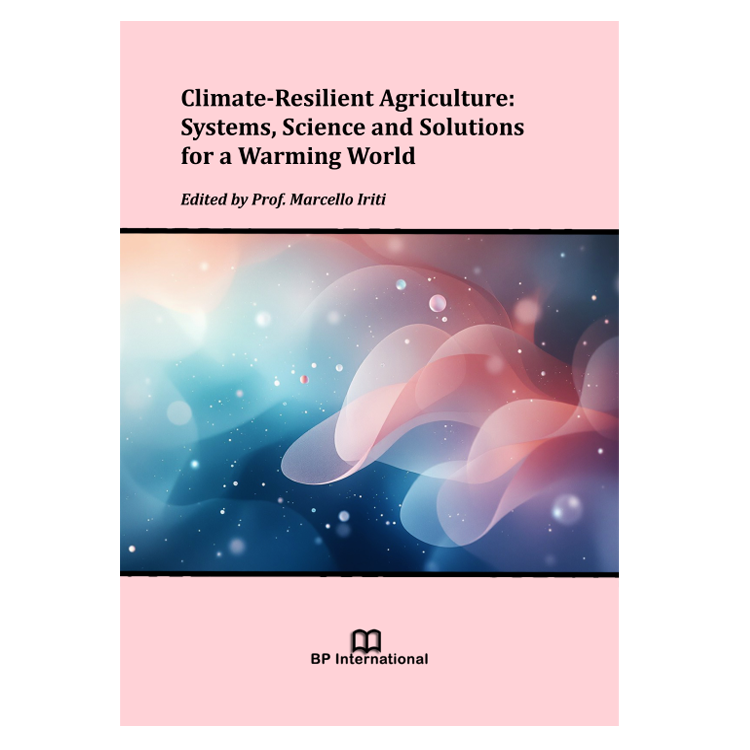
Agriculture stands at the forefront of the global climate challenge. Rising temperatures, shifting rainfall patterns, prolonged droughts, floods, soil degradation, emerging pests, and increasing weather extremes are reshaping the conditions under which food is produced. At the same time, agriculture must meet the growing demand for nutritious food while conserving natural resources and reducing its environmental footprint. Climate-Resilient Agriculture: Systems, Science and Solutions for a Warming World explores the scientific principles, practical strategies, and integrated approaches required to build agricultural systems capable of adapting to these rapidly changing conditions.
This book presents climate resilience as a multidimensional concept that connects crop and livestock production, soil and water management, biodiversity, agricultural technology, socio-economic systems, and policy frameworks. It examines how advances in climate science, genetics and breeding, precision agriculture, digital technologies, sustainable land management, and ecosystem-based approaches can strengthen agricultural productivity while reducing vulnerability to climatic stresses.
Particular emphasis is placed on developing adaptive farming systems that improve resource-use efficiency, restore ecological functions, diversify production, and enhance the capacity of farming communities to anticipate, withstand, and recover from climate-related disruptions. The book also highlights the importance of integrating scientific innovation with traditional knowledge, local experience, institutional support, and effective governance.
Designed for students, researchers, educators, agricultural professionals, policymakers, and development practitioners, this volume provides a broad perspective on the challenges and opportunities associated with climate-resilient agriculture. By bringing together systems thinking, scientific evidence, and solution-oriented practices, it aims to contribute to the development of productive, sustainable, and resilient agricultural landscapes capable of supporting food security and rural livelihoods in an increasingly warmer and uncertain world.