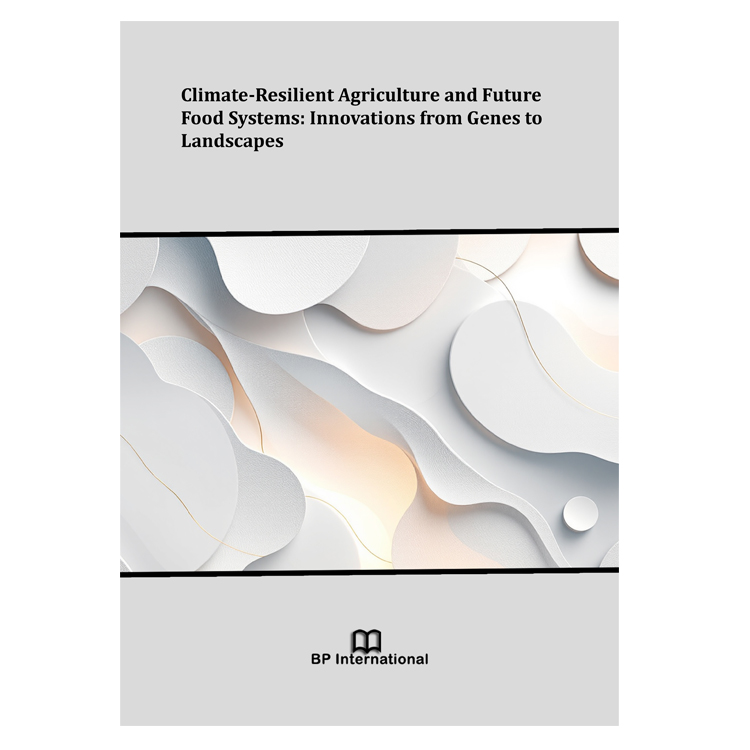
Climate change is reshaping agricultural production and food systems worldwide, creating complex challenges for productivity, resource availability, ecosystem stability, and food and nutritional security. Rising temperatures, erratic rainfall, water scarcity, soil degradation, biodiversity loss, and the changing incidence of pests and diseases are increasing the vulnerability of farming systems. Addressing these pressures requires integrated strategies that combine scientific innovation, ecological understanding, technological advancement, and supportive policies.
This volume presents a multidisciplinary perspective on the development of resilient and sustainable agricultural systems, with emphasis on innovations ranging from genetic improvement and crop physiology to farm management and landscape-level interventions. It explores advances in genomics, biotechnology, crop and livestock improvement, precision agriculture, climate-smart farming, soil and water management, agroecology, integrated pest management, and sustainable intensification. Attention is also given to the growing role of artificial intelligence, remote sensing, modelling, digital agriculture, and decision-support tools in improving risk assessment, resource-use efficiency, and adaptive management.
A central theme is the need to move beyond isolated technologies and adopt a systems-oriented approach that recognises the interactions among genes, crops, livestock, farms, ecosystems, markets, institutions, and policies. The volume also highlights the importance of translating research into practical and scalable solutions that are locally appropriate and responsive to the needs of farmers and rural communities.
Intended for researchers, students, educators, policymakers, extension professionals, and development practitioners, this volume provides a broad foundation for understanding current advances and future priorities in resilient agriculture. It seeks to contribute to the development of productive, inclusive, resource-efficient, environmentally sustainable, and climate-adaptive food systems capable of supporting present and future generations.