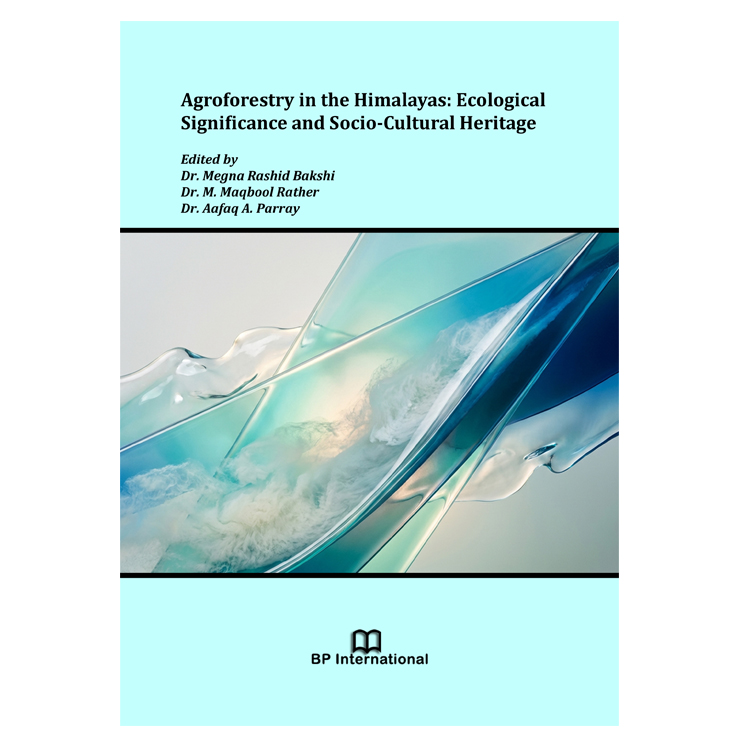
Agroforestry has long been an integral component of Himalayan landscapes, supporting ecological stability, rural livelihoods, and cultural continuity across diverse mountain communities. The Himalayan region is characterized by fragile ecosystems, steep terrain, rich biodiversity, variable climatic conditions, and a strong dependence of local populations on agriculture, forests, and livestock. Within this complex environment, agroforestry has evolved as an important land-use practice that integrates trees, crops, and animals to fulfil multiple ecological, economic, and household requirements.
This book examines the ecological significance of agroforestry systems, with particular emphasis on their contributions to biodiversity conservation, soil fertility improvement, erosion control, water regulation, nutrient cycling, carbon sequestration, and microclimate moderation. It also highlights the role of multipurpose tree species and traditional management practices in enhancing the resilience and productivity of mountain farming systems under increasing environmental and climatic pressures.
Equal attention is given to the socio-cultural dimensions of agroforestry. Indigenous knowledge, customary management practices, sacred landscapes, traditional species preferences, community institutions, and locally developed conservation strategies have shaped these systems over generations. Such practices provide essential resources including food, fodder, fuelwood, timber, medicines, and other products while also preserving cultural identity, traditional knowledge, and community relationships with the natural environment.
By bringing together ecological, socio-economic, and cultural perspectives, this volume offers a holistic understanding of agroforestry in mountain regions. It is intended to serve as a valuable resource for students, researchers, educators, policymakers, development professionals, and practitioners working in sustainable agriculture, forestry, biodiversity conservation, rural development, and the preservation of traditional ecological knowledge.