Climate change is reshaping agricultural systems across the world by altering temperature regimes, rainfall patterns, water availability, soil productivity, pest and disease dynamics, and the frequency of extreme weather events. These changes present serious challenges to food production, rural livelihoods, ecosystem stability, and long-term food and nutritional security. At the same time, agriculture itself contributes significantly to greenhouse gas emissions and therefore occupies a central position in global efforts to achieve sustainable, climate-resilient, and low-carbon development.
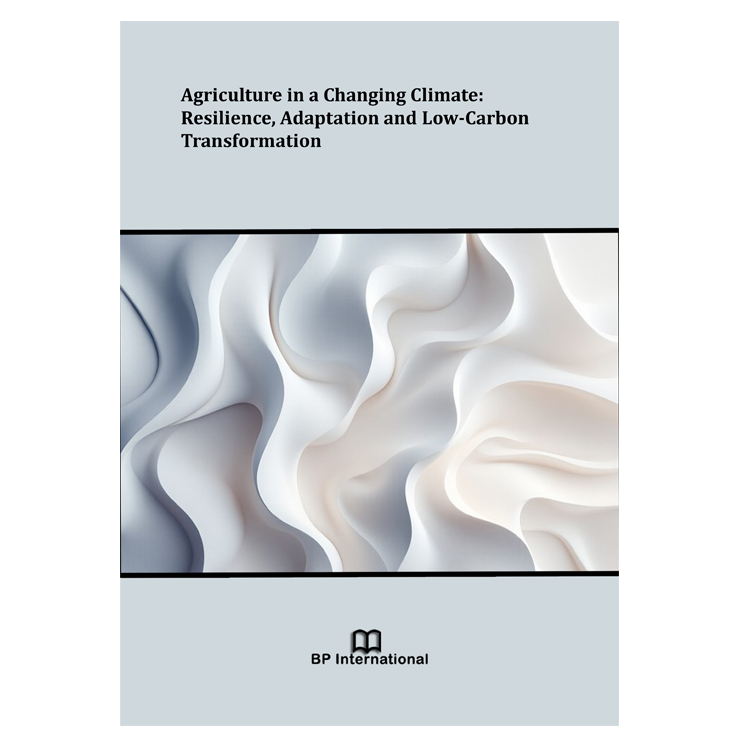
Agriculture in a Changing Climate: Resilience, Adaptation and Low-Carbon Transformation provides a comprehensive overview of the emerging challenges, opportunities, strategies, and innovations associated with climate-responsive agriculture. The book brings together key perspectives on climate impacts, agricultural vulnerability, adaptation planning, resilience building, natural-resource management, climate-smart technologies, sustainable intensification, and greenhouse gas mitigation. Particular attention is given to approaches that can improve productivity while conserving soil, water, biodiversity, and other critical ecological resources.
The volume also highlights the growing importance of low-carbon agricultural transformation through improved nutrient management, renewable energy, efficient irrigation, agroforestry, carbon sequestration, precision farming, circular bioeconomy approaches, and sustainable livestock and cropping systems. In addition, it recognises that technological solutions must be supported by enabling policies, institutional capacity, climate information services, financial mechanisms, local knowledge, and active participation of farming communities.
Designed for researchers, students, academicians, policymakers, extension professionals, development practitioners, and agricultural stakeholders, this book aims to provide an integrated understanding of how agricultural systems can respond effectively to climatic uncertainty. Ultimately, it emphasises the need for scientifically informed, economically viable, socially inclusive, and environmentally responsible pathways that strengthen agricultural resilience while supporting the transition towards a sustainable and low-carbon future.