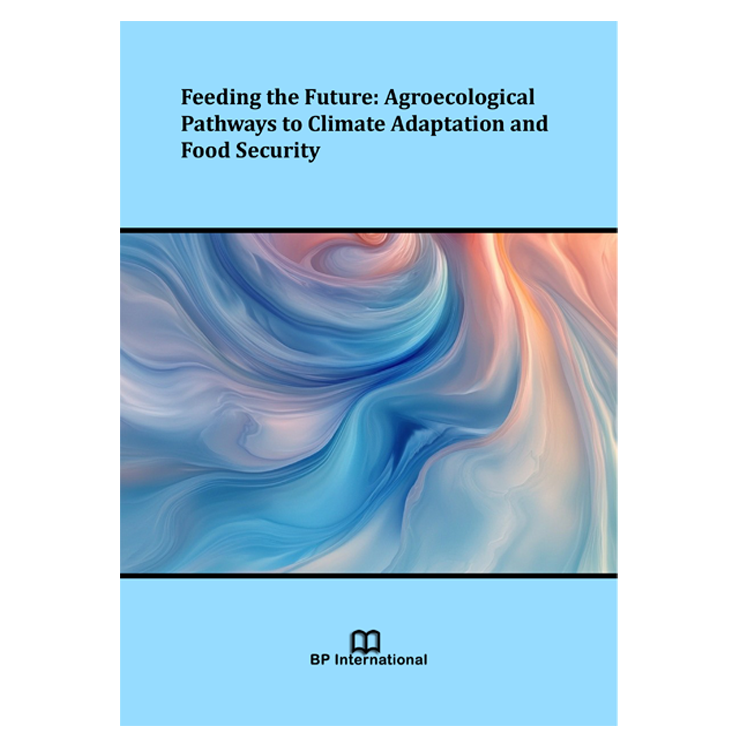
The global food system stands at a critical crossroads. Climate change, declining soil fertility, biodiversity loss, water scarcity, and increasing pressure on natural resources are reshaping the conditions under which food is produced and distributed. At the same time, a growing population and persistent inequalities in access to nutritious food demand agricultural systems that are productive, resilient, environmentally sustainable, and socially inclusive. Feeding the Future: Agroecological Pathways to Climate Adaptation and Food Security explores agroecology as a transformative approach for addressing these interconnected challenges.
This book examines how ecological principles can be integrated with agricultural knowledge, local practices, scientific innovation, and community participation to strengthen the resilience of food systems. It highlights approaches such as crop diversification, soil and water conservation, integrated farming, biodiversity management, sustainable nutrient cycling, and climate-resilient production strategies. Particular attention is given to the role of smallholder farmers, indigenous and traditional knowledge, technological innovation, supportive institutions, and enabling policies in advancing sustainable agricultural transitions.
Beyond improving productivity, agroecology offers pathways for reducing dependence on external inputs, restoring degraded ecosystems, conserving natural resources, and improving the capacity of farming communities to adapt to climatic uncertainty. The book also considers the economic, social, and governance dimensions that influence the adoption and scaling of agroecological practices.
Bringing together perspectives on climate adaptation, sustainability, and food security, this volume aims to provide a broad understanding of how agroecological approaches can contribute to more resilient and equitable food systems. It is intended for students, researchers, educators, policymakers, development practitioners, and agricultural professionals seeking practical and conceptual insights into building a sustainable food-secure future.