The ubiquitous coumarin scaffold, a privileged structure in medicinal chemistry and natural product synthesis, continues to captivate organic chemists due to its diverse biological activities and intriguing reactivity. From its initial isolation from Tonka beans to its widespread application as a pharmaceutical agent, fluorescent dye, and fragrance component, the journey of coumarin has been marked by continuous innovation in synthetic methodologies. Given the importance of parent coumarin (umbelliferone) and its derivatives, we have gathered diverse methods for the synthesis of coumarin and its scaffold from coumarin bearing alkanoyl or aroyl or o-allyl, o-alkyne, etc. as starting materials and thermal Claisen rearrangement, Reformatsky reaction, Wittig reaction, borohydride reduction, selenium dioxide oxidation, etc.
The synthesis of coumarin compounds and their scaffold bearing alkanoyl, aroyl, allyl, prenyl and allied types of side chain in the basic coumarin moiety got wide attention due to their manifold biological and pharmaceutical importance.
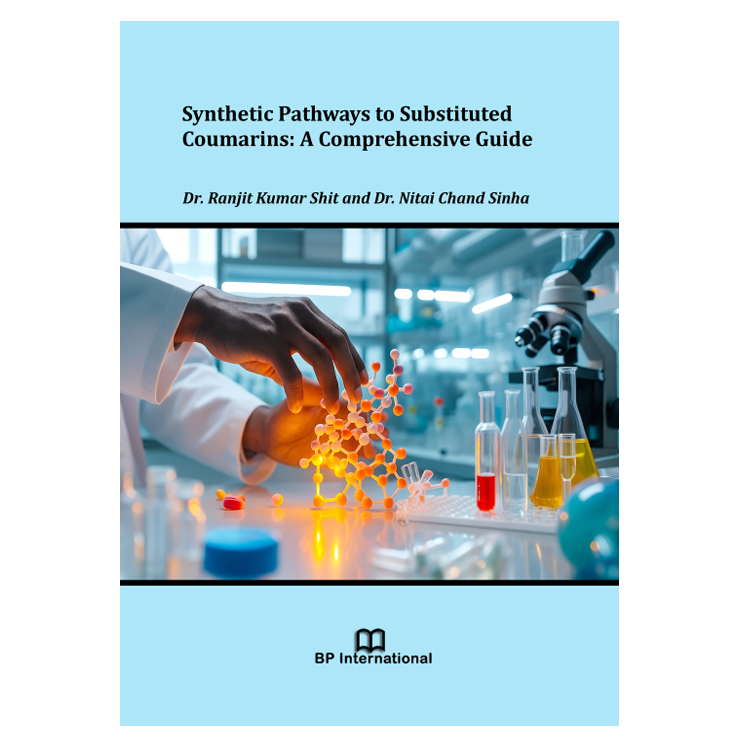
This book, “Synthetic Pathways to Substituted Coumarins: A Comprehensive Guide,” aims to provide a focused and practical overview of key synthetic strategies employed in the construction of substituted coumarin derivatives. Our intention is to serve both as an accessible introduction for newcomers to the field and a valuable reference for experienced researchers seeking to expand their synthetic repertoire.