Rural Africa is a landscape of immense beauty, resilience, and deep cultural roots but it is also a space where crime and insecurity often thrive beyond the reach of the formal state. In these vast and often neglected regions, policing is not just about enforcement; it is about trust, tradition, and survival. This book emerges from the urgent need to critically examine and rethink rural policing, crime prevention, and security governance in African contexts, where formal institutions frequently struggle against geographic isolation, economic hardship, and deeply embedded cultural dynamics. Drawing on a wide range of studies including a focused analysis of South Africa’s National Rural Safety Strategy (NRSS), community-based safety initiatives, and traditional justice mechanisms this volume seeks to illuminate the complex realities of safety and security in rural Africa. It investigates how communities themselves become active agents in crime prevention, often resorting to informal or indigenous systems of justice where formal policing is ineffective, absent, or distrusted. The pages that follow bring into sharp focus a range of critical issues: from livestock theft and illegal mining to land-related conflicts and organised rural crime. It engages with the lived experiences of rural communities, the evolving history of rural criminology on the continent, and the vital need for decolonised, locally grounded research methodologies that truly reflect African realities. This work does not romanticise traditional systems, nor does it uncritically endorse state-driven strategies. Instead, it offers a balanced and evidence-based assessment of what is working, what is failing, and what must be reimagined. It challenges the reader to consider a hybrid model of security governance one that values local knowledge, promotes inclusive development, and builds trust between citizens and the state. Ultimately, this book is both a call to action and a framework for transformation. It is dedicated to rural African communities whose safety is too often overlooked, and to the scholars, policymakers, practitioners, and activists committed to building a more secure, just, and participatory future.
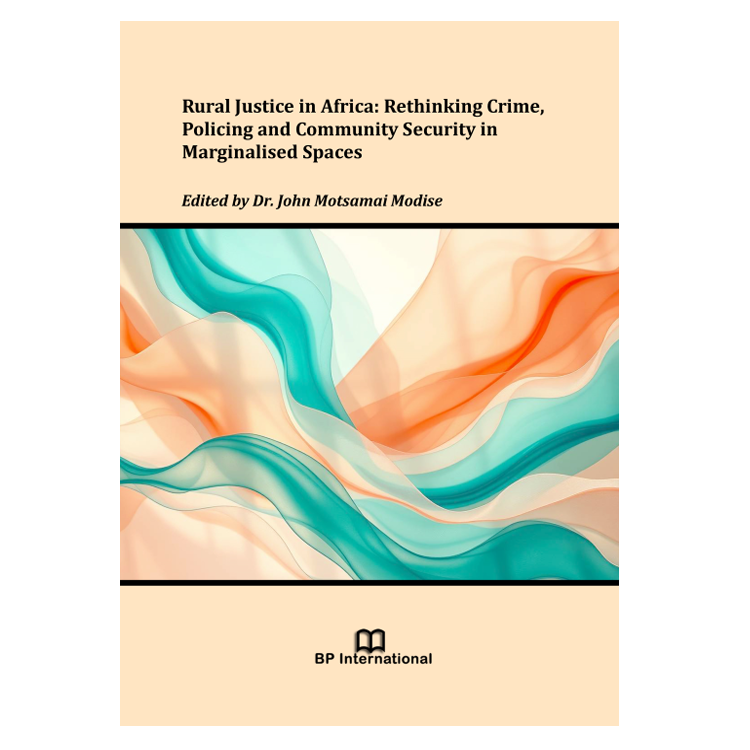
Rural Justice in Africa: Rethinking Crime, Policing and Community Security in Marginalised Spaces
Dr. John Motsamai Modise
Tshwane University of Technology, South Africa.
Book Details
| Edited by | Dr. John Motsamai Modise |
|---|---|
| Pages | 214 |
| Publisher | BP International |
| Language | English |
| ISBN-13 (15) | 978-93-88417-88-4 (Print) |
| Published | September 20, 2025 |