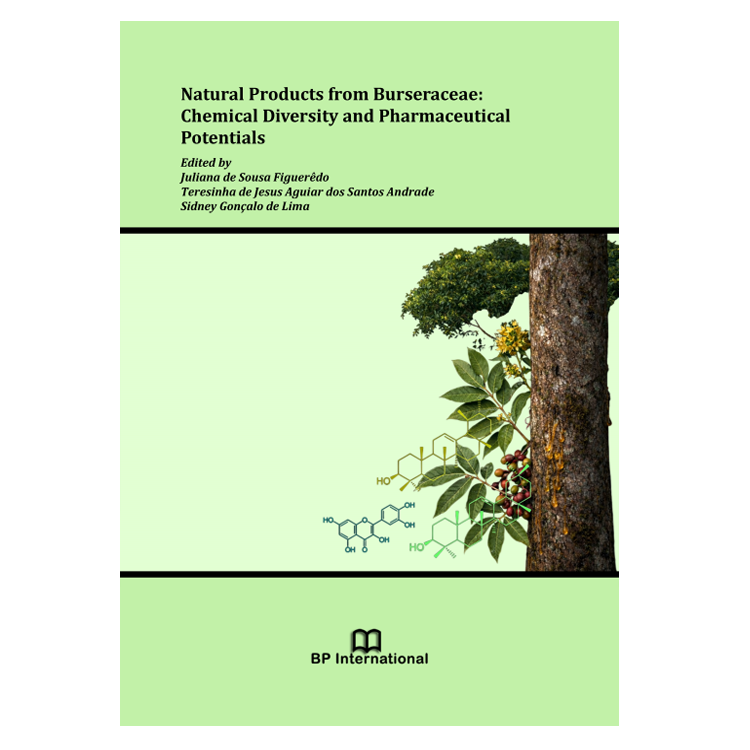
Tropical biodiversity, particularly within the Neotropical flora, represents a vast and largely unexplored reservoir of secondary metabolites with significant pharmacological potential. Among the most relevant botanical families, Burseraceae stands out not only for its wide geographical distribution and ecological importance in biomes such as the Amazon and the Cerrado, but also for its remarkable capacity to biosynthesize aromatic oleoresins. This book, Natural Products from Burseraceae: Chemical Diversity and Pharmaceutical Potentials, fills a critical gap in the scientific literature by systematically and rigorously integrating botanical, phylogenetic, chemical and pharmacological knowledge about this family.
The work guides the reader through a technical and analytical journey, beginning with the general, phylogenetic and botanical characterization of Burseraceae, providing a foundation for understanding their taxonomic diversity and evolutionary adaptations. Throughout its chapters, the authors explore the complex network of terpenoids monoterpenes, sesquiterpenes and triterpenes, that make up the resins exuded by genera such as Protium, Boswellia, Commiphora and Canarium. The technical discussion of the biosynthesis of these compounds, integrating the mevalonate (MVA) and methylerythritol phosphate (MEP) pathways, provides researchers with a solid basis for understanding the chemical diversity observed in both the fixed and volatile constituents of these plants.