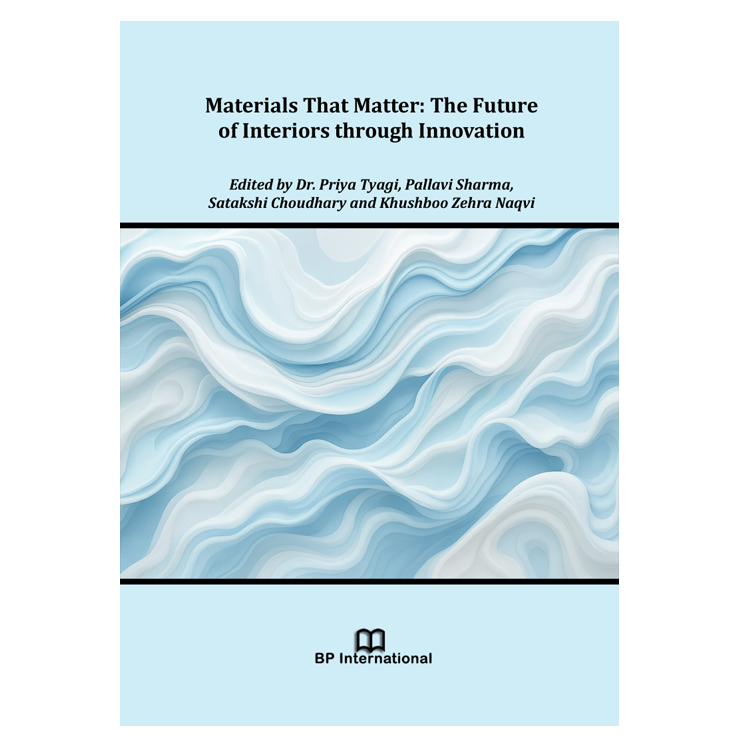
In the current interior design discourse, materiality has moved beyond its historical position as an inert component in spatial organization. It has become a dynamic force impacting not only the aesthetic and functional aspects of interiors but also psychological, ecological, and cultural experiences by the users. This book discusses the changing role of Smart materials in interior space, with particular emphasis on their ability to respond, adapt, and play a meaningful role in the quality of built environments. Located at the intersectionof technological innovation, ecological stewardship, and human-centered design, interior materials today represent a new paradigm, a paradigm in which surfaces are not inert but interactive. Smart materials can self-regulate, sense the environment, and optimize performance. Advances in self-cleaningcoatings, biophilic content, and digitally embedded materials represent a move toward responsive and sustainable interior environments.
The book’s chapters provide a systematic investigation of such major themes as hygienic smart finishes, green material innovation, digital-cultural transformation of interiors, biophilic incorporation, and the economic significance of new materials in current design practice. Each chapter is guided by inter-disciplinary insights from such fields as material science, environmental psychology, cultural studies, and design economics.
The book is written for a general audience of design professionals, teachers, researchers, and high-level students. It attempts to enhance the insight into where material innovation overlaps with universal social concerns, sustainability, health, identity, and cost-effectiveness. By probing these issues, the book invites a rethinking of how materials are chosen, incorporated, and lived in interior spaces. Finally, this book calls for a conscious and engaged material practice, one that acknowledges the far-reaching impact of materials on spatial perception, human activity, and the built environment as a whole.