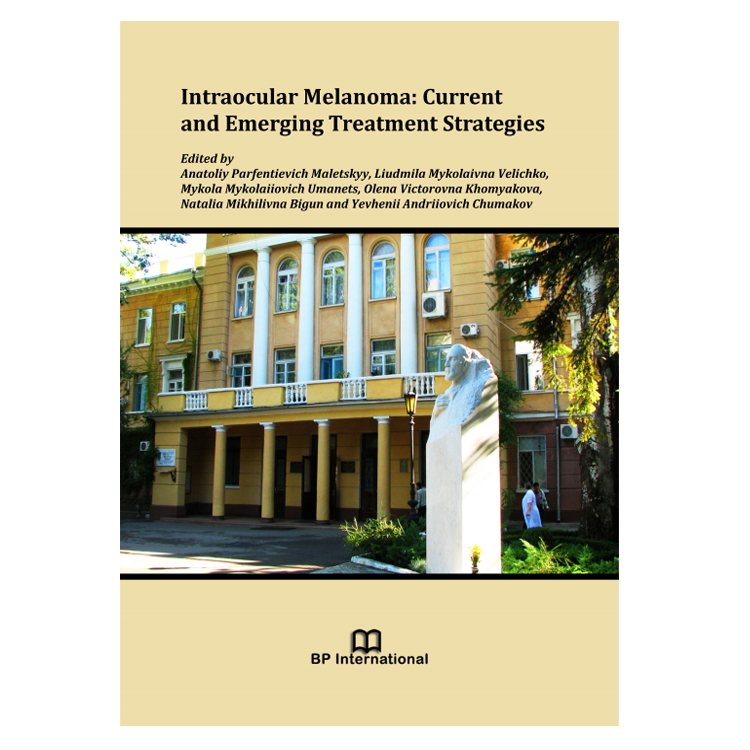
This monograph is devoted to the possible treatment methods for intraocular melanoma. It is well known that intraocular melanomas pose a threat not only to the visual organ but also to the patient’s life. In recent decades, considerable attention has been paid to organ-preserving treatment of uveal melanoma — an approach valued not only for preserving the eye itself, but also for retaining vision in many patients. This is especially critical in cases where the melanoma affects the patient’s only seeing eye.
It is worth noting that life expectancy outcomes for patients with intraocular melanoma do not significantly differ between organ-preserving treatment and enucleation.
Chapter One provides an analysis of current organ-preserving treatments for intraocular melanoma and potential paths for their improvement.
Chapter Two discusses the nature of dysfunctions in the body’s antitumour resistance system in patients with intraocular melanoma, along with possible ways to stimulate the immune system to achieve better clinical results.
Chapter Three explores the rationale for including alpha-2b-interferon as part of a combined therapy with photodestruction and brachytherapy in organ-preserving treatment.
Chapter Four presents data supporting the effectiveness of selective intra-arterial chemotherapy, which helps reduce tumour cell resistance and enhances their sensitivity to photodestruction and localised radiotherapy.
Chapter Five presents the outcomes of resection of iris, ciliary body, and choroidal melanomas using a radio wave scalpel, which allowed for a reduction in intra- and postoperative complications.
Chapter Six describes the results of intraocular melanoma endoresection using electrowelding technology, developed jointly by the Filatov Institute (Odesa) and the E.O. Paton Institute of Electric Welding (Kyiv). This method expanded indications for endoresection and lowered the risk of surgical and postoperative complications.
Chapter Seven presents the outcomes of eye enucleation using our newly developed technique involving rigid fixation of the ocular prosthesis to the musculoskeletal ocular stump. This significantly improved prosthesis motility, positively impacting the psychological and social rehabilitation of patients after enucleation.
In conclusion, I would like to express my deep gratitude to my co-authors for their valuable scientific contributions and assistance in writing this book. I also extend sincere thanks to our mentors — the pioneers of organ-preserving therapy for intraocular melanoma patients.