Triazoles and fused triazole heterocycles have attracted considerable attention in modern organic and medicinal chemistry because of their structural diversity, synthetic versatility, and wide range of potential biological applications. These nitrogen-rich heterocyclic compounds play an important role in the development of biologically active molecules and have applications in pharmaceutical chemistry, drug discovery, and related scientific fields.
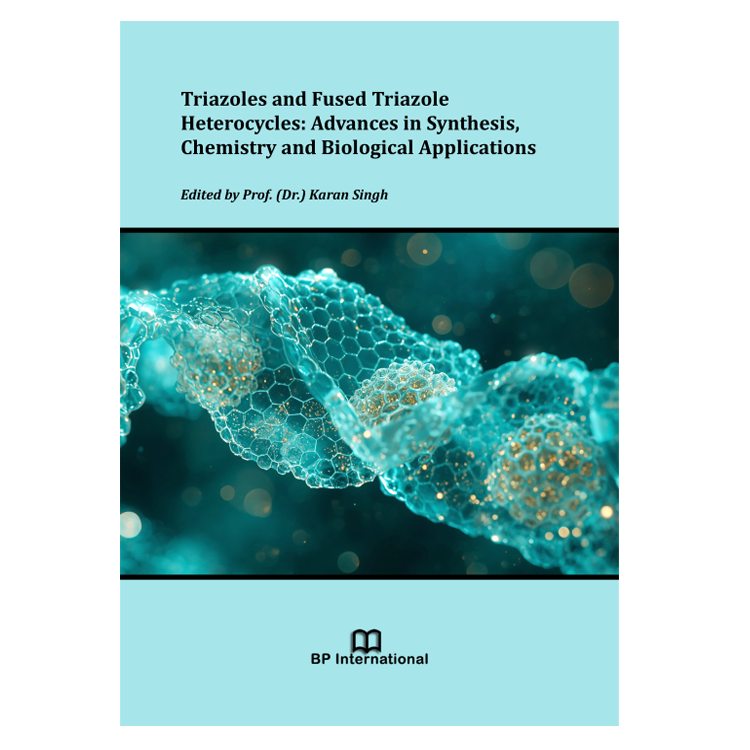
The book Triazoles and Fused Triazole Heterocycles: Advances in Synthesis, Chemistry and Biological Applications provides an overview of recent developments in the synthesis, structural characterization, and biological applications of triazoles and selected fused heterocyclic systems. The five chapters cover fundamental aspects of triazole chemistry, synthetic strategies, structural elucidation, and advances in triazolopyrimidines, triazolothiadiazoles, and thiazolotriazoles, highlighting their potential biological significance.
This volume is intended for researchers, postgraduate students, doctoral scholars, and faculty members working in organic chemistry, heterocyclic chemistry, medicinal chemistry, pharmaceutical sciences, and related interdisciplinary fields. It may also serve as a useful reference for scientists interested in the design and synthesis of nitrogen-rich heterocycles, the development of new synthetic methodologies, and the exploration of heterocyclic scaffolds for biological applications. By presenting contributions from researchers with interests in different aspects of triazole chemistry, the book aims to encourage interdisciplinary understanding and further scientific investigation.
We express our sincere appreciation to all the contributing authors for sharing their expertise and for their efforts in preparing the chapters. We also acknowledge the support of the editorial and publishing teams in bringing this volume to completion. We hope that the book will provide a useful resource for the scientific community, stimulate further research into triazoles and fused triazole heterocycles, and contribute to the continued development of this dynamic area of chemistry.
It is our sincere hope that Triazoles and Fused Triazole Heterocycles: Advances in Synthesis, Chemistry and Biological Applications will serve not only as a reference on established knowledge and recent developments but also as a source of inspiration for future investigations into the synthesis, chemistry, and applications of these versatile heterocyclic systems.