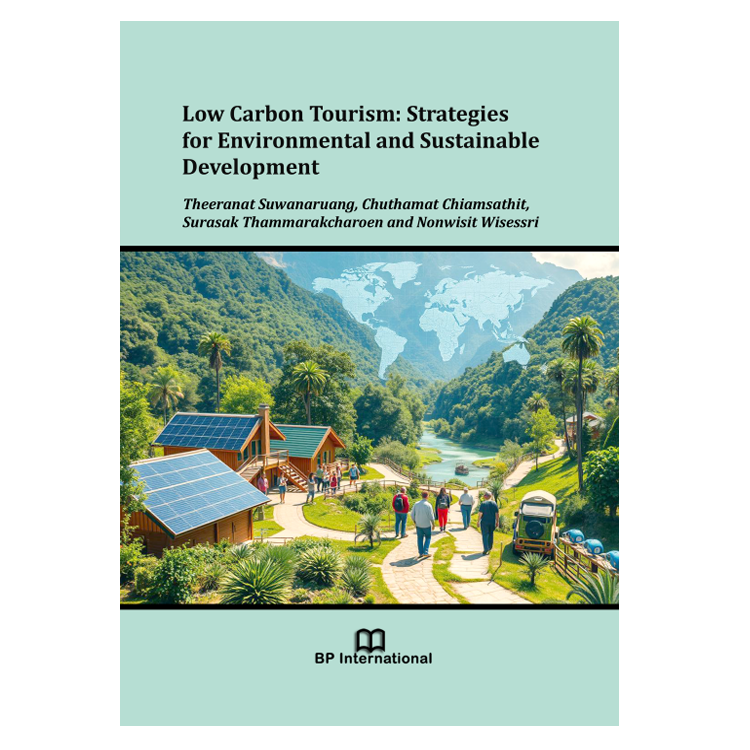
Tourism has become a cornerstone of global economic development, contributing substantially to GDP (Gross Domestic Product), employment, and intercultural exchange. However, its exponential growth has precipitated severe environmental consequences, particularly in carbon emissions from transportation, resource overconsumption, and ecosystem degradation. As climate change intensifies, the tourism industry faces an imperative transformation toward sustainable practices that reconcile economic vitality with ecological responsibility. Low Carbon Tourism (LCT) emerges as a strategic framework addressing these challenges by systematically reducing carbon emissions across transportation, accommodation, and recreational activities while fostering environmentally conscious behaviours. This approach aligns with sustainable tourism principles, aiming to meet present needs without compromising future generations’ access to natural and cultural heritage. By integrating environmental stewardship, social responsibility, and economic viability, LCT provides a pragmatic pathway toward achieving global sustainability objectives.
This monograph provides a comprehensive examination of low-carbon tourism implementation strategies, focusing on the nexus between tourism activities and environmental impacts, particularly carbon emissions and resource utilisation. It synthesises theoretical frameworks with empirical evidence, analysing successful international initiatives to extract practical insights for policymakers, industry practitioners, and local communities. The study emphasises the critical role of policy instruments, regulatory mechanisms, technological innovations, and community participation in advancing sustainable tourism development.
The contemporary tourism industry stands at a critical juncture, confronting dual imperatives of escalating demand and mounting environmental accountability. Conventional high-carbon tourism models characterised by intensive energy consumption and excessive waste generation are demonstrably unsustainable. Consequently, adopting low-carbon strategies represents not merely an option but an existential necessity for preserving destination viability and safeguarding natural and cultural patrimony for posterity. Achieving low-carbon tourism requires coordinated action among diverse stakeholders. Governments must establish enabling policy frameworks and regulatory standards; private sector entities must embrace technological innovations and sustainable business practices; local communities must actively participate in conservation initiatives; and tourists themselves must adopt responsible consumption behaviours. This multi-stakeholder approach creates synergistic effects that amplify individual contributions, transforming low-carbon tourism from a niche concept into mainstream practice. This work aspires to bridge academic discourse and practical application, offering both theoretical insights and actionable strategies for implementing low-carbon tourism. It reflects growing global recognition that tourism can serve as a catalyst for sustainable development rather than a driver of environmental degradation. Through rigorous analysis and evidence-based recommendations, this study seeks to inform policy formulation, guide industry transformation, and stimulate further scholarly inquiry in pursuit of a resilient, environmentally responsible tourism sector that benefits present and future generations alike.