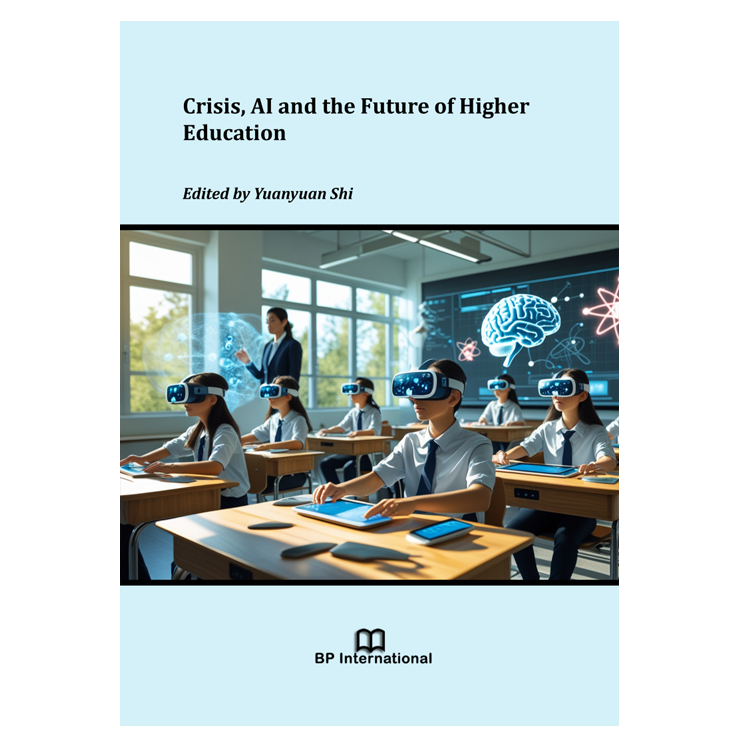
In this era of global challenges and rapid technological advancements, the landscape of higher education is undergoing profound transformations. Since the outbreak of the COVID-19 pandemic at the end of 2019, traditional educational practices have been severely disrupted, while the integration of artificial intelligence (AI) into various educational domains, including teaching, learning, and assessment,has been significantly accelerated. This book, titled “Crisis, AI, and the Future of Higher Education,” aims to explore the impact of these crises and technological changes on the future of higher education, with a particular focus on the experiences and cultural adaptations in China.
Over the past few years, significant changes have occurred in the delivery of school education and people’s educational philosophies. The pandemic forced educational institutions worldwide to shift from face-to-face instruction to online learning. This shift not only brought opportunities for educational transformation but also posed many challenges, highlighting the resilience and vulnerabilities of educational systems across the globe. With its vast population, uneven distribution of educational resources between the eastern and western regions, and a complex and diverse education system, China faced unique challenges during this period of crisis and opportunity. Understanding how these crises and opportunities have shaped the educational experiences of students, especially in higher education, including graduate studies, and how educators and policymakers have effectively responded to these challenges, is of utmost importance.
This book is divided into three main parts, each addressing a different aspect of the transformation in higher education. The first part examines the impact of crises, such as the COVID-19 pandemic, on educational practices. It looks at changes in graduate students’ reading habits, mentoring, research productivity, and delayed graduation. This section provides valuable insights into how students and educators have adapted to these unprecedented circumstances and the long-term implications for educational policies and practices.
The second part delves into the role of artificial intelligence in driving the transformation of higher education. It explores the connotations, dilemmas, and pathways for AI to empower high-quality development in education. This section emphasizes the potential of AI to revolutionize teaching methods, curriculum design, and educational assessment, while also addressing the ethical, legal, and social challenges that arise from the integration of AI in education.
The third part focuses on specific case studies and empirical research to illustrate the practical applications and outcomes of AI in higher education. It examines how AI can enhance learning strategies, information literacy, and English proficiency among university students, as well as its impact on different stages of education, from undergraduate to graduate studies.
Throughout this book, we emphasize the importance of using diverse research methods to leverage the strengths of AI while addressing its limitations and potential risks. We advocate for the establishment of robust ethical frameworks, the enhancement of digital literacy among students and educators, and the creation of inclusive and equitable educational environments that can thrive in the digital age.
Moreover, higher education will continue to evolve to meet the needs of a rapidly changing world. This book aims to contribute to the ongoing dialogue on how to harness the power of AI and other emerging technologies to create a more resilient, innovative, and equitable education system. We hope that this work will inspire educators, policymakers, and researchers to explore new possibilities and develop strategies to shape a brighter future for higher education.
We extend our gratitude to everyone who has contributed to the publication of this book, including researchers, participants in the surveys, and institutions. Their dedication and insights have enriched our understanding of the complex interplay between crises, AI, and the future of higher education. We also thank the readers who will engage with this book and join us in exploring this interesting field.